
Home  /  Archives  /  Vol 2, Issue 1  /  Article
Research Article
Latika Rohilla, Priyanka Walia, Nancy Sahni

Impact of Culturally Tailored Diabetes Self-Management Education on Dietary Practices Among Children with Type 1 Diabetes

[Year:2026] [Month:February - April] [Volume:2] [Number:1] [Pages:10] [Pages No:03-12]
Keywords: children, diabetes self-management education, nutrition, type 1 diabetes
DOI: 10.00000/aijhris.2026.0201| Open Access| How to cite| Citations 0 | 282 views Download PDF
Impact of Culturally Tailored Diabetes Self-Management Education on Dietary Practices Among Children with Type 1 Diabetes
Abstract Full Text References Keywords
Abstract
Introduction: Dietary practices are difficult to modify in childhood diabetes. Methods: A comparative study of 122 children assessed the impact of culturally tailored diabetes self-management education (DSME). Results: The DSME group showed superior diet knowledge and healthier snacking patterns. Conclusion: Structured, culturally tailored DSME improves carbohydrate-related knowledge and dietary behaviour in children with type 1 diabetes.

Introduction

Dietary practices remain among the most difficult components of diabetes self-management to modify and sustain, particularly in children. This study evaluated a culturally tailored diabetes self-management education (DSME) programme.

Methodology

Study population

A total of 122 children aged 1 to 18 years with type 1 diabetes were enrolled, grouped as DSME-received (n = 61) and newly diagnosed without DSME (n = 61).

Data collection

Caregiver interviews using a validated questionnaire captured dietary habits and junk-food consumption.

Results

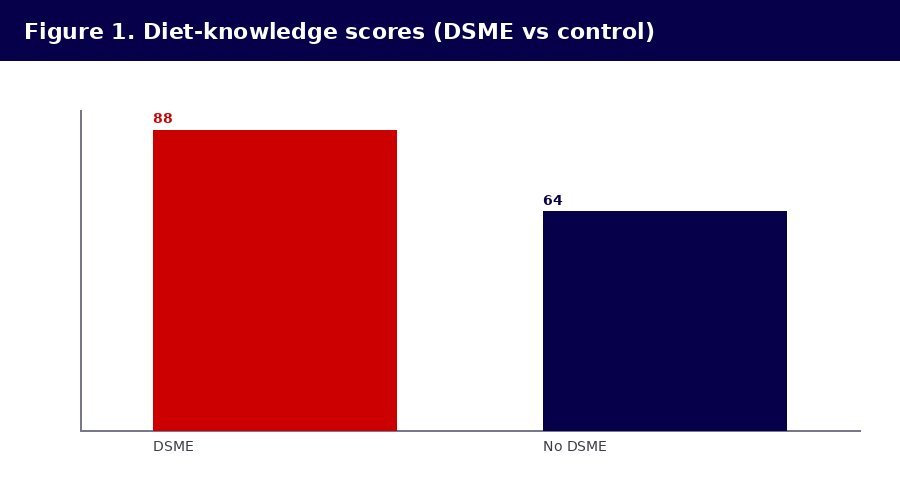
Parents in the DSME group demonstrated better diet knowledge, including selection of sugar-controlling snacks (88.5% vs 63.9%) and food-label checking (77% vs 41%). Junk-food intake was higher in the non-DSME group.

Diet-knowledge indicatorDSMENo DSME
Prefers sugar-controlling snacks88.5%63.9%
Checks food labels77%41%

Conclusion

Children exposed to structured DSME demonstrated significantly superior carbohydrate-related knowledge and healthier dietary practices than newly diagnosed children.

References

  1. American Diabetes Association. Standards of medical care in diabetes. Diabetes Care. 2024;47:S1-S300.
  2. Chiang JL, Maahs DM, Garvey KC. Type 1 diabetes in children and adolescents. Diabetes Care. 2018;41:2026-44.
Keywords: children diabetes self-management education nutrition type 1 diabetes
Download Full Text (PDF) View Full Issue

Related Articles in This Issue

Debriefing Methods in Healthcare Simulation and Clinical Competence: A Systematic Review Protocol
Latha Venkatesan, Sandeep Kollipara
Hand-Hygiene Compliance After a Gamified Training Intervention: A Short Communication
Sara Ahmed